


Research Focus

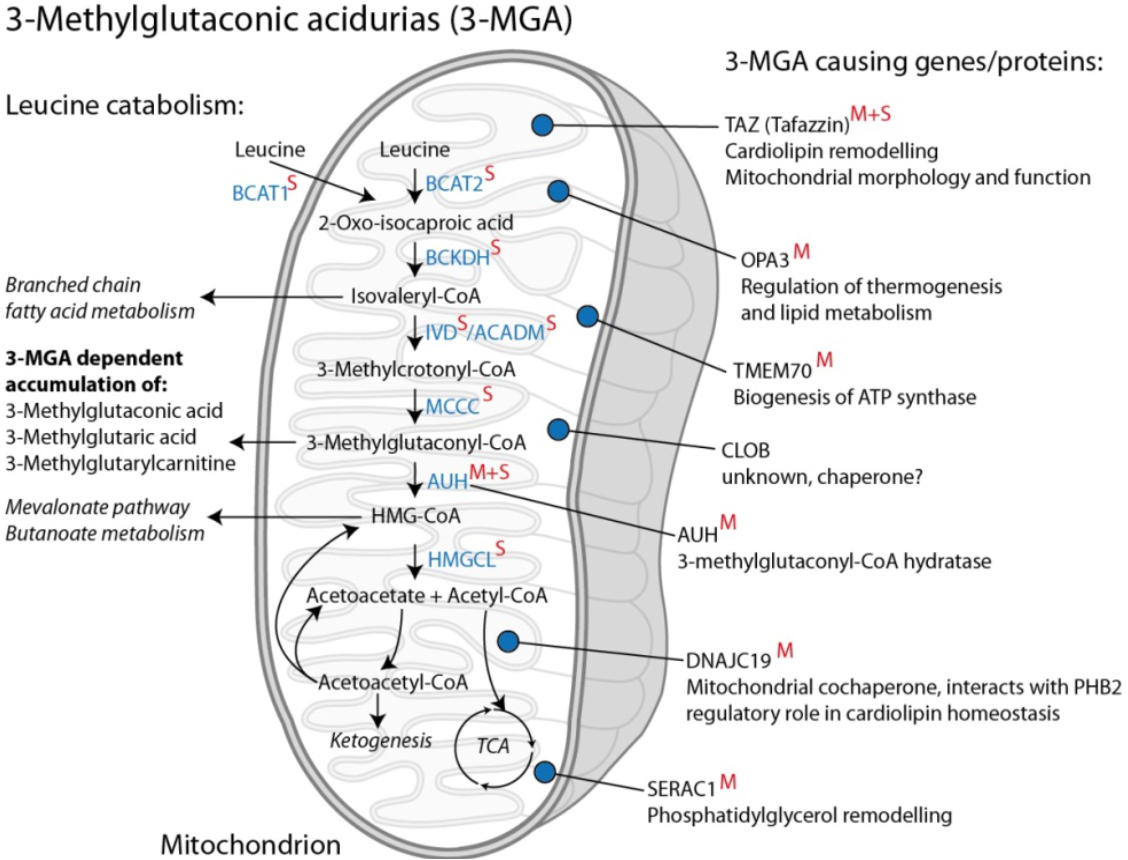
As an independent research group of the Institute of Human Genetics, we focus on studying inherited metabolic diseases, elucidating so-far poorly or not at all elucidated pathomechanisms.
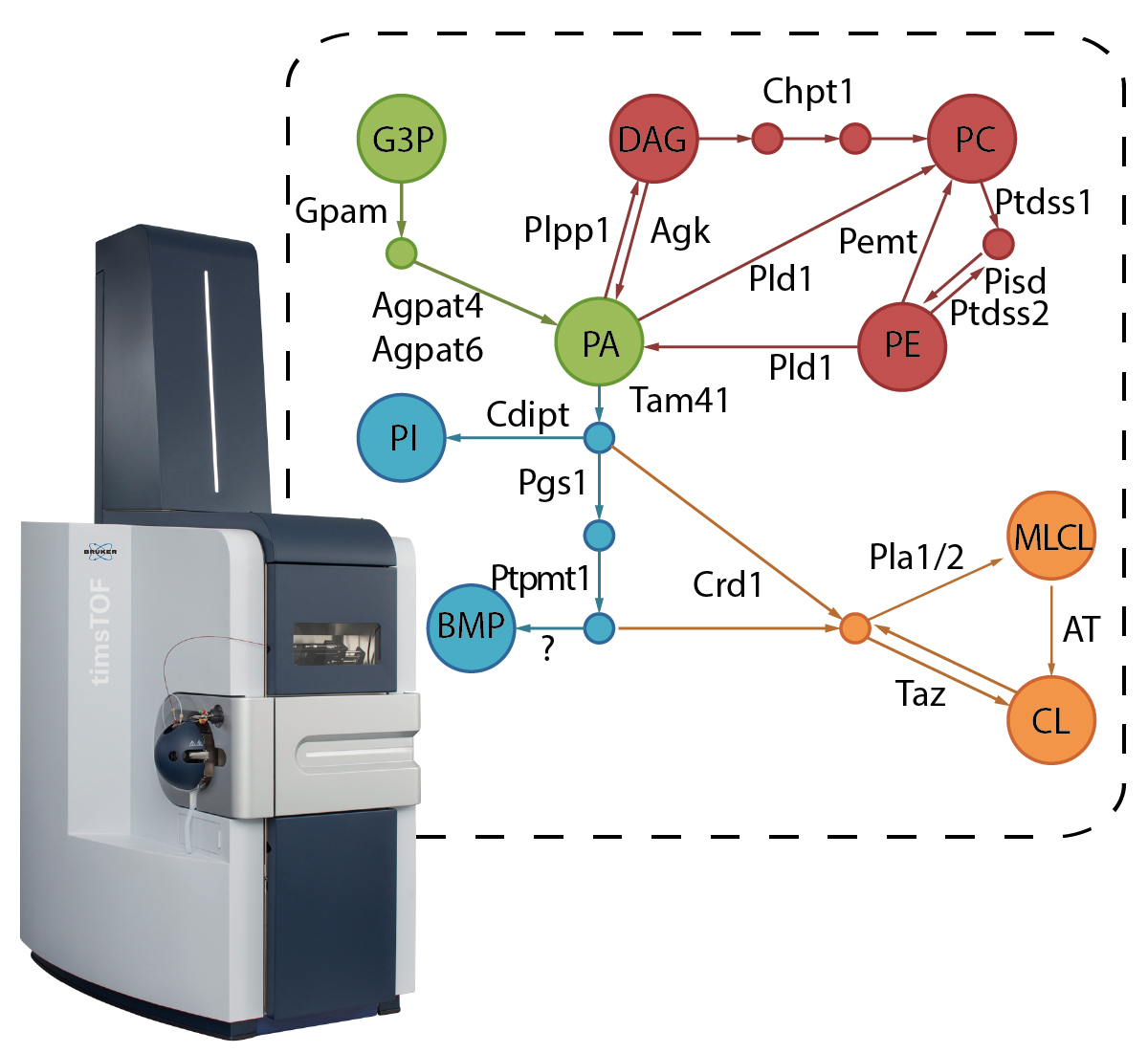
We are especially interested in understanding the dynamic and interconnected membrane lipid metabolism of organelles and cells, for which we develop novel analytical, data analysis, and bioinformatics approaches.
Recent research highlights:
- Uncovering a generalizable specificity interaction mechanism shaping cardiolipin diversity by artificial neural networks (https://doi.org/10.1016/j.celrep.2020.02.115)
- Structural characterization of cardiolipins using fragmentation spectra and mathematical modeling (https://doi.org/10.1073/pnas.1719407115)
- Involved in the discovery of novel lipid enzyme function (https://doi.org/10.1073/pnas.1917461117)
- Development of novel LC-MS/MS analytical tools to study phospholipid metabolism (https://pubs.acs.org/doi/10.1021/acs.analchem.0c01933)
Genetic metabolic diseases
Lipidomics
Bioinformatics
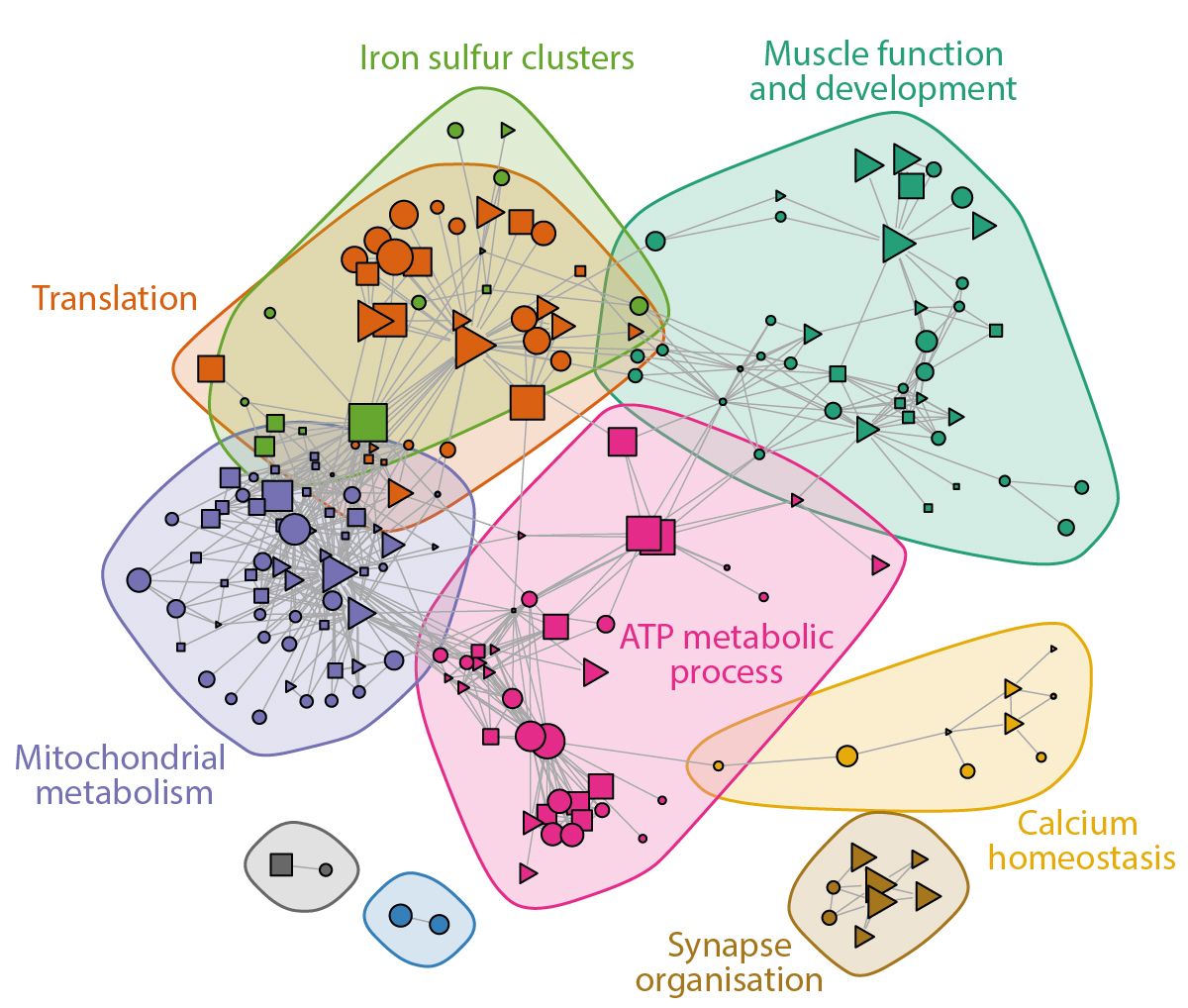
Image: Oemer and Koch et al. Cell Reports 2020
Creativity, Science & Fun
Science is clearly about discovery and trying out novel approaches while always questioning the status-quo and its limitations. When we encounter a problem, we adopt, improvise and overcome.
As a young, dynamic team, we do not shy away from developing and validating our own protocols apart from commercial standardized Kits to answer research questions. We create our own knockout disease models, adopt cell culture media composition to mimic lipid compositions of human tissues and develop specialized centrifugation protocols for generating MS compatible subcellular fractions of cellular compartments to elucidate complex mechanisms.
We see communication and motivation as key factors in research, which is why we have regular social activities and lab retreats that include hiking, sledging and even sailing. And celebrating achievements must not be neglected.